
It is the desire of every parent that their child grows into a confident, responsible and independent person. Apart from developing skills such as being able to read, count and recognise colours in preschools, there are other useful ways through which parents can contribute to the development of children in the comfort of their homes through everyday household chores.
When a child becomes three years old, they have developed an interest in everything around them. They love to copy what adults do, love to explore their environment and be part of the daily routine activities in the family setting. It could be something like putting away their toys, watering plants, or even dumping their dirty clothes in the laundry basket.
Introducing children to doing some household chores does not mean that one should make them undertake adult chores, but rather give them the chance to practice independence and learn how to be confident and helpful.
5 Simple Chores Every 3-Year-Old Can Do at Home
1. Putting Toys Away After Playtime
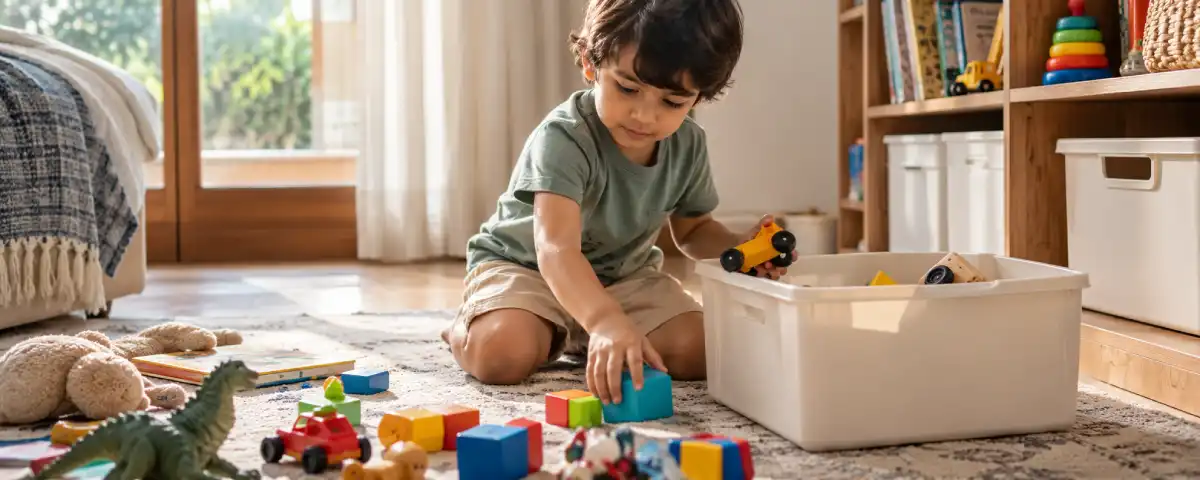
One of the simplest ways to incorporate chores for kids would be to encourage them to clean up after playing.
When children are three years old, they might like to take out several toys at a time. Learning how to put them back in their proper places will teach kids that organising their playtime space is important.
The way to do this:
Place the toy boxes within easy reach of your children. Teach them where each particular toy should go. Do not try to organise the whole room at once; start with fewer toys. Make the process fun with a little clean-up song.
2. Placing Dirty Clothes in the Laundry Basket
Another useful chore that kids can do is to put dirty clothes in the laundry basket. Tell your child to pick up his or her shirt, pants, or socks and put them in a laundry basket. This will help your child understand which things belong to him or her and learn to engage in self-care activities.
You can make this activity more appealing for your child by telling him or her to find all socks or to gather clothes from one room. Use a lightweight laundry basket and watch your child while doing the chore.
3. Watering Plants
Children often enjoy activities involving water, nature, and outdoor exploration. Watering plants can combine household responsibility with an opportunity to learn about the natural world.
Give your child a small, lightweight watering can containing a limited amount of water. Show them how to water a plant gently without flooding the pot.
During the activity, explain that plants need water, sunlight, and care to grow.
Learning benefits include:
- Developing gentle, controlled movements.
- Encouraging curiosity about nature.
- Building a sense of responsibility.
- Introducing basic concepts about plant growth.
Always supervise the activity, particularly around balconies, slippery floors, and plants that may be toxic if ingested.
4. Wiping Small Spills
Small spills are a normal part of life with young children. Instead of always cleaning them yourself, encourage your child to participate when it is safe.
Give your child a clean, soft cloth and demonstrate how to wipe a small spill of plain water from a stable, low surface.
How it supports development:
Children learn that accidents can be addressed calmly and that they can participate in simple solutions.
Use the opportunity to teach practical language, such as “wipe,” “clean,” and “dry.”
Never allow children to handle cleaning chemicals, broken objects, hot liquids, or spills involving potentially harmful substances. Adults should deal with those situations.
5. Putting Books Back on the Shelf
Should your child love listening to stories, then organising their books will become an automatic thing that they do every day. Once done reading, encourage your child to put each book back on a shelf where they can reach.
Also encourage them to put their books back facing outward, or if they have their favourite ones, to put them together. This will help your child learn how to organise and, at the same time, instil in them respect for books.
Want to explore more ways to support your child’s early learning journey?
Fostering independence at three years old begins with small, meaningful opportunities to participate in everyday life. From putting toys away and sorting laundry to watering plants and helping prepare for mealtimes, simple chores can encourage responsibility, coordination, problem-solving, and confidence.
Parents do not need to expect perfection or introduce a long list of responsibilities. Instead, focus on choosing safe, manageable activities, demonstrating each task, and celebrating your child’s efforts. Remember, the purpose of introducing chores is not simply to keep the house tidy. It is to help children discover that they are capable of learning, contributing, and trying new things.
Visit Elzee Preschool to learn more about early childhood education, and read our related guide on Screen Time vs. Creative Time for more ideas on creating a balanced, engaging environment for young children. It is the desire of every parent that their child grows into a confident, responsible and independent person. Apart from developing skills such as being able to read, count and recognise colours in preschools, there are other useful ways through which parents can contribute to the development of children in the comfort of their homes through everyday household chores.
When a child becomes three years old, they have developed an interest in everything around them. They love to copy what adults do, love to explore their environment and be part of the daily routine activities in the family setting. It could be something like putting away their toys, watering plants, or even dumping their dirty clothes in the laundry basket.